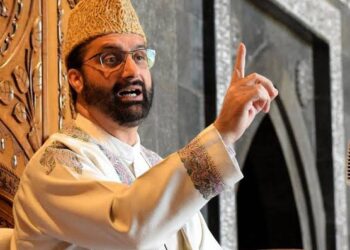

Religious scholars bearing allegiance to various schools of thought in Islamic Jurisprudence understand that they wield an influence. What they must not forget is the fact that they also have a responsibility to not allow and entertain sectarian narratives.
On their pulpits, especially on Fridays, Kashmir’s religious scholars, sermonizers and preachers have to ensure nothing is said in the heat of the moment to stoke sectarian passions.
While it is impossible to have no difference of opinion, but what is critically important is to develop a culture of tolerance in which difference of opinion is not perceived as hatred.
One has to show respect to the other view and also tolerate it, but a red line has to be drawn as far as sectarian narratives are concerned.
In this direction, scholars belonging to different schools of thought must evolve a consensus that differences are addressed by a joint council of Ulema, not by individual clerics on the pulpit.
Credit where it is due, there are some clerics who have acted as conduits and played the role as interfaith bridge-builders, apart from their primary role as sermonisers and community educators. They have emphasised the role of shared foundational values instead of playing with peoples’ raw emotions.
Sadly, there are some serial and habitual offenders as well who do not believe in inclusive messaging. They must introspect and realise the dangers of the seeds of division that they keep on sowing from time to time.
It is hoped that clerics understand that with great power comes greater responsibility.